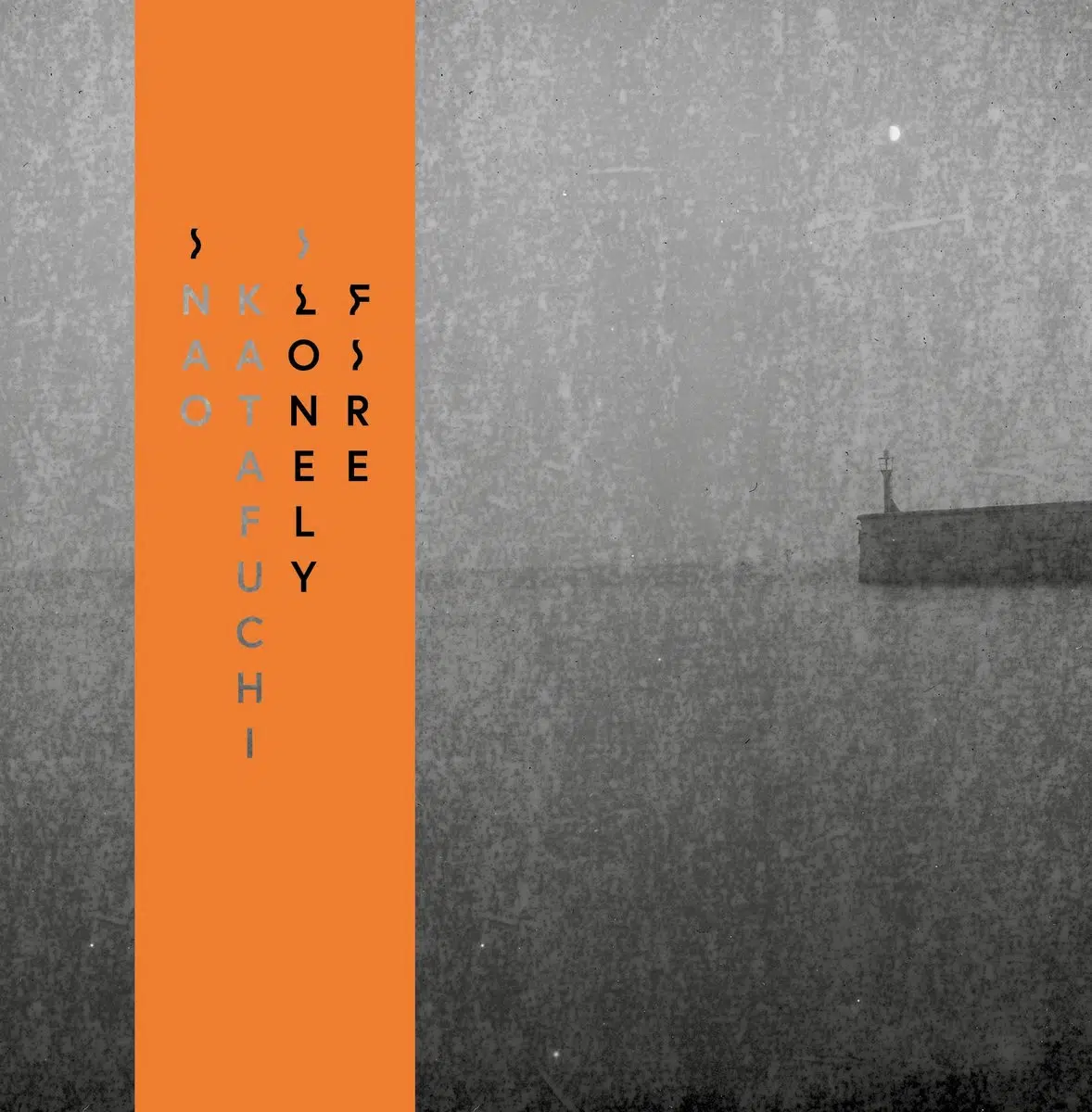
Nao Katafuchi has been moving through minimal synth, coldwave, and darkwave for years; certainly, long enough that Lonely Fire arrives with some history behind it. Born in suburban Tokyo, later based in New York, and then established in Germany from 2015 onward, he came out of the synth underground before establishing his solo catalogue with the Yumegoto EP, the full-length Émergence, and the darker Stahlgrau. Lonely Fire, released by Kernkrach as a 10-track, 41-minute LP, sits squarely after all of that.
Nao’s work has long carried two pressures at once. One is cold, architectural, and rhythm-driven. The other is melodic, romantic, and faintly theatrical. Stahlgrau leaned harder into the severe end of that spectrum, with collaborations and a stricter surface. Lonely Fire pulls the melodic side back into full view, but the discipline stays intact.
“Kieta Ashita” gives a strong clue about how the album handles that balance. With a deep, pulsating synth bass and an arpeggiated line carrying Katafuchi’s mournful Japanese vocal, it reflects the album’s embrace of analog texture, a cold cinematic atmosphere, and melancholic lyrics.
The track list supports that impression. “Lonely Fire,” “A Flash Point,” “All for Nothing,” “Anesthesia,” “In Between Times,” “A Sensitive Matter,” “Crying in the Shadow,” and “State of Mind” all suggest a record that stays inside one emotional climate. The guest vocal from MADMOIZEL on “Love and Superstitions” looks like the main shift in tone, and probably one of the points where the album lets in a different shade without disturbing its shape.
There is a reason this approach suits him now. Katafuchi has already done the early statement, the first full-length expansion, and the darker consolidation. By this point in the catalogue, the question is not whether he can build a cold synth world – it is how much definition he can give it without loosening its grip.
Lonely Fire looks well placed to answer that. The title alone suggests the tension at the centre of the record: heat held in isolation, light under pressure. That image suits an artist whose music has always lived between between minimal structure and romantic pull. On this album, those elements appear to be aligned with unusual clarity.