If Spoons had only made “Nova Heart,” their place in Canadian music history would be assured. The iconic 80s single cut through the FM hair rock of the time with hooks and synth lines with class that was cooler than Mike Score’s haircut. As luck would have it, the group of Burlington, Ontario, high school students who created the band had more than one song in them – and a trajectory that would take singer and lead guitarist, Gordon Deppe, into A Flock of Seagulls’ stage lineup.
Spoons began in 1979, with guitarist Gordon Deppe and bassist Sandy Horne coming together alongside drummer Peter Shepherd and keyboard player, Brett Wickens. Wickens played on the debut single, “After the Institution,” released through Mannequin Records, before he moved on to Ceramic Hello and then to a career working with Peter Saville in England.
Rob Preuss joined in December 1980, having just turned fifteen, and initially learned Wickens’ parts before finding his own approach on the debut album, Stick Figure Neighbourhood. By “Nova Heart” and Arias & Symphonies, his sparse keyboard lines had become part of the band’s signature: the four-note polyphony of his Roland Jupiter-4 encouraged arrangements built from individual melodies, layered without filling every gap. It gave the band a sound that shaped the way the songs breathed.
The band’s subsequent history took in Nile Rodgers’ production on Talkback and, much later, a recording partnership with Jeff Carter, who produced 2019’s New Day New World. That was a solid and compelling album; made without contributions from Preuss but very much in the line that the core of Horne and Deppe had charted back in Burlington.
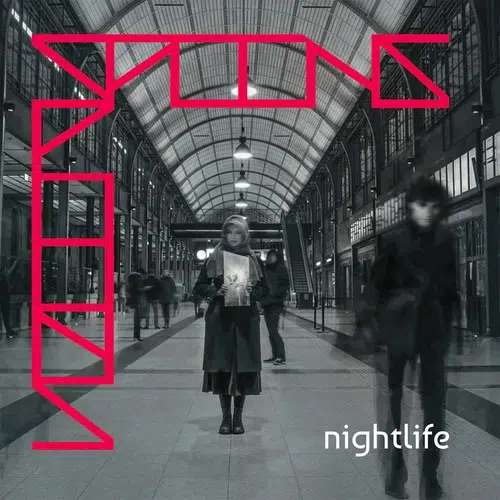
Carter has returned in the studio chair for the new Spoons album, Nightlife, with Deppe and Horne still at the centre. The keyboard credits now include Scott MacDonald and Matthew Deppe, alongside the producer, who also took care of the drum programming The band is far removed from the 80s, but the recording gives its electronic pulse a generous coating of guitar and vocal harmonies that hint at their origins while bringing them into modern times.
On the title track, clipped bass notes and bright keyboards establish the dancefloor well before Gord Deppe’s slightly breathy voice calls everyone out of the house. The guitar leaves little trails of light across the rhythm, while the lyric imagines an escape from the noise of everyday life. The message is that there is still somewhere to go after dark.
“Take the World” has a promise that lasts for one night, with the possibility of moving on already written into the lyric. That expiry date gives its optimism some heft. Deppe has linked the song to the Burlington music shop where the young band rehearsed and spent their time together: a private world made between school and whatever came next.
“Doomed” tightens the screws, setting short synth phrases against insistent electronic percussion before stretching the melody across the chorus. Its images of disappearing footsteps and old conversations turn the wish to begin again into something troubled. The title’s threat hangs over a remarkably energetic track, with bright synth figures continuing to move beneath the regret.
“Phenomenal” returns to school corridors and youthful defiance. The teachers wanted Deppe and Horne to sit quietly, practice their math and learn their history. They wanted to make pop. Looking back, they regret nothing. The more awkwardly titled “Better Late Than Never Did It” has great keyboard hooks and some piano work to invigorate the instrumental. There is an air of nostalgia, too, in “Push Repeat & Go,” which draws in string sounds to accompany the soaring guitar line while managing to sound like a British indie track from the turn of the century.
“Perfect Ending for a Perfect Story” supplies a useful change of texture, with bright lead vocals from Horne and brisk acoustic strumming carrying a farewell without dragging its feet. There is perhaps a Modern English influence, which helps to complete the link to the band’s 80s origins. The closing track, “Your Heart Not Your Head,” returns to a firm electronic rhythm; its clipped verses opening into longer vocal lines and a lingering fade after moments of intensity. At the end of the night, nobody seems keen to put their coat on. The solution is to flip the record and start again.